Widget types
Every widget has one of five types. The type decides its power and its special trick. Numbers from Clash rules v8 (the Crown).
| Type | Power | As your lead | What it does |
|---|---|---|---|
| Producer | 2 | 4 | Grows your economy: +2 resources every match. Beats a Defender on top. |
| Defender | 3 | 6 | Solid and steady. Beats an Attacker on top. In Faultline it also defends a zone +2. |
| Attacker | 3 | 6 | Hits hard. Beats a Producer on top. |
| Booster | 1 | 2 | +2 when it touches your lead. Weak on top: it is a support piece. |
| Wildcard | 2 | 4 | On top it becomes the type it touches most. +1 resource every match. |
A lead counts its power × 2. Each touching widget of the lead’s type adds +1. See How scoring works.
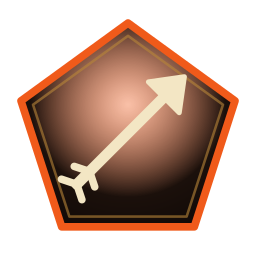



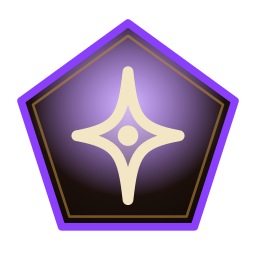
Every widget is drawn as a face of the Core: a pentagon in its type colour with its mark: a spear for an Attacker, a shield for a Defender, a cog for a Producer, three rising chevrons for a Booster and a four-point star for a Wildcard.
Rarer is not stronger
Section titled “Rarer is not stronger”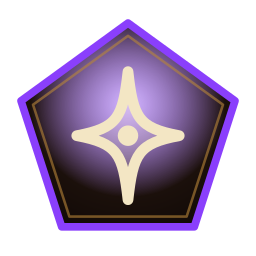
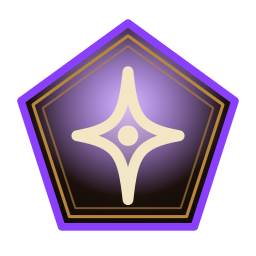
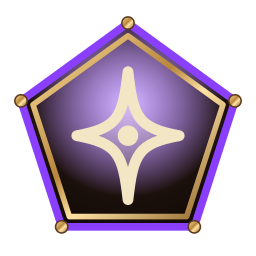
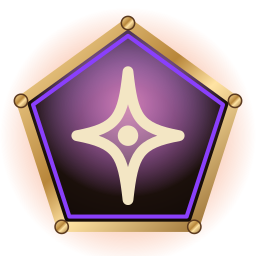
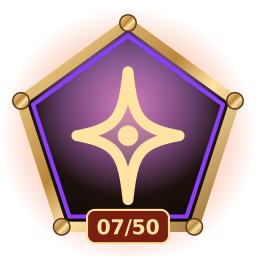
The five finishes: common a gilt hairline; uncommon a double gilt line; rare a gilt rim with studs on the corners; epic a gold frame and a glow in the widget’s edition colour; legendary the same with a gold mark and its number (for example 07/50).
Widgets come in rarities from common to legendary. Rarity changes how a widget looks, never how it plays. A legendary Wildcard scores exactly like your starter Shard. See Rarity and editions.
Where to put them
Section titled “Where to put them”- Boosters around your strongest leads: an Attacker or Defender with a Booster beside it scores +2 more.
- Matching types next to each other: when one is on top, each touching one of the same type adds +1.
- A mix of types around the Core, so whatever lands on top has a chance to counter.
- A Wildcard beside two of the same type, so it has something to become.
Next: How scoring works.